
Complete Engine Diagnostics Services in Orange Park
Engine diagnostics in Orange Park, FL, covers the full drivability loop, from check engine lights to complex performance concerns. At Miller's Automotive, our technicians diagnose domestic, Asian, and diesel vehicles with manufacturer-level testing procedures. We identify issues involving engine performance, drivability, fuel systems, and warning lights to locate the source of the problem. These diagnostic procedures provide more accurate results than basic parts-store code readers.
Before recommending repairs, we document our findings through a digital inspection with photos and videos. This helps you understand the issue and review the recommended solution before approving service. We provide a written quote before any repair begins, and qualifying work is backed by a written warranty. After-hours drop-off makes it easier to handle unexpected vehicle issues without disrupting your schedule.
Engine Diagnostics Services
Modern engine management systems operate through a continuous feedback loop. The powertrain control module monitors oxygen sensors, mass airflow sensors, throttle position sensors, and other components. It adjusts fuel trim, spark timing, and ignition output in real time. Florida heat, humidity, and Orange Park driving conditions can increase stress on sensors and electrical connections, leading to check engine lights and drivability concerns.
Check Engine Light Diagnostics
A stored diagnostic trouble code gives us a starting point, but it does not always identify the actual problem. We use an Autel MaxiSYS MS906 Pro through the OBD-II port and verify faults with live data before recommending repairs. Our check engine light diagnostics process confirms the cause of warning lights and performance issues through detailed testing.
Engine Repair
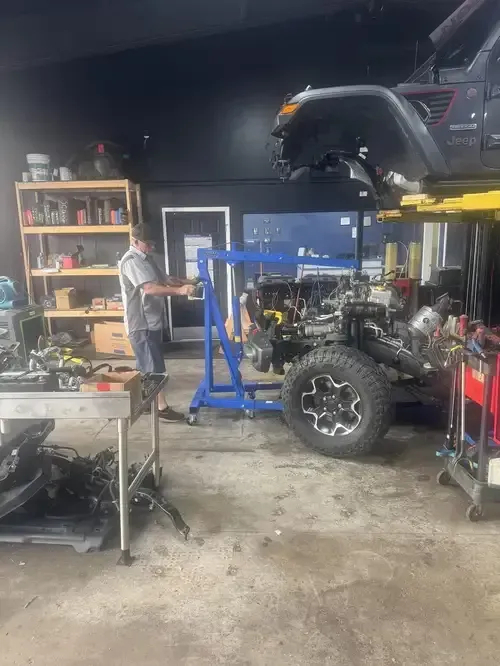
Once testing confirms a mechanical issue, we document the repair process before work begins. We handle engine repairs ranging from valve cover gasket leaks to more complex internal engine concerns. Our engine repair services address mechanical issues identified during diagnostics with proper repair procedures.
Engine Oil Leak Repair
Oil leaks from valve covers, oil pans, or rear main seals may first appear as a burning smell before visible fluid reaches the ground. During engine oil leak repair, we use UV dye and under-car inspections to locate leaks and determine the required repairs.
Engine Replacement
Compression testing, oil analysis, and borescope inspections help us determine when internal damage requires engine replacement instead of repair. Our engine replacement service explains available engine options and what the installation process includes.
Fuel System Repair and Cleaning
Fuel system problems can cause rough idling, hesitation during acceleration, or lean-running fault codes. Through fuel system repair and cleaning, we test fuel system components and perform cleaning procedures to determine if injectors need service or replacement.
Drivability Diagnostics
Drivability concerns like stumbling under load, idle surging, or warm-up hesitation may occur without a stored code. These issues are often caused by intermittent sensor signals or fuel trim changes that appear only during driving conditions. Fleming Island and Oakleaf commuting patterns can reveal faults that may not appear during a steady highway drive. We focus on identifying the conditions that trigger the problem.
We capture live data and misfire counter values during road testing through the OBD-II system. This allows us to record issues while they occur instead of relying only on static scan results. Repairs may involve sensor replacement, wiring repairs, connector repairs, or ECU relearns after confirmed component changes. For unusual engine noises, we evaluate operating conditions, inspect related components, and use diagnostic testing to help determine the source before recommending appropriate repairs.
Ignition Repair
Ignition problems can begin as rough cold starts before developing into noticeable misfire codes. On higher-mileage vehicles, moisture intrusion from cracked coil boots can affect spark performance and cause ignition failures. We inspect ignition components, including boots, spark plug wells, and plugs, before recommending replacement.
Our technicians combine misfire counter readings with ignition waveform testing to identify the affected cylinder. This helps determine if the issue involves spark, fuel, or compression problems. Repairs may include coil, plug, or boot replacement, followed by a verification scan after a completed drive cycle.
Engine Sensors
Engine sensors provide the data the control module uses to manage fuel delivery and ignition timing. Oxygen sensors, mass airflow sensors, coolant temperature sensors, and crankshaft position sensors all influence engine performance. When sensor readings become inaccurate, you may notice reduced fuel economy, hesitation, or a check engine light.
We test sensor operation using live data through the OBD-II port instead of replacing parts based only on fault codes. Our technicians compare sensor output against manufacturer specifications to confirm the issue. If replacement is needed, we install an OEM-spec sensor and clear adaptive memory for proper relearning.
Oxygen Sensor Replacement
A P0420 or P0430 code does not always mean the catalytic converter has failed. In many cases, a slow oxygen sensor may provide inaccurate feedback and affect catalyst efficiency readings. We test sensor response speed and fuel trim data before recommending oxygen sensor replacement.
Once the sensor is confirmed faulty, we install an OEM-spec replacement and verify operation through a complete drive cycle. Our catalytic converter services cover additional testing when the converter itself is confirmed as the cause of an efficiency code.
Diesel Repair
Diesel vehicles require specialized diagnostic procedures because their systems differ from gasoline engines. Common concerns include injector wear, glow plug failures, and DPF regeneration issues. Trucks used for towing, hauling, or longer routes around Green Cove Springs may experience these problems under heavy operating conditions.
We use manufacturer-level diesel scan procedures to evaluate injector balance rates, DPF soot levels, and fuel rail pressure data. Repair recommendations depend on confirmed findings and may include injector cleaning, fuel filter service, injector replacement, or DPF service.
Common Engine Diagnostics Problems We Diagnose
Engine problems can develop in many ways, from warning lights and performance changes to unusual driving symptoms. Identifying the source requires proper testing because multiple components can create similar concerns. Drivers throughout Orange Park, Fleming Island, and Oakleaf rely on accurate diagnostics to understand what is happening before repairs begin.
Check Engine Light Is On
A steady check engine light means the ECU has stored one or more fault codes after detecting an issue. The cause may range from a loose gas cap to an oxygen sensor problem or engine misfire. We verify fault codes against live data through our check engine light diagnostics process before recommending repairs or replacing parts.
Flashing Check Engine Light
A flashing check engine light indicates an active misfire that may damage the catalytic converter if driving continues. The issue is often related to ignition or fuel delivery problems affecting a specific cylinder. We recommend scanning the vehicle promptly to identify the cause before additional damage occurs.
Rough Idle or Stalling
Rough idle or stalling at a stoplight can result from vacuum leaks, throttle body issues, idle control problems, or incorrect fuel trim readings. We begin with live data analysis at idle to identify the failing system instead of replacing parts without confirmation.
Hesitation or Loss of Power
Hesitation during acceleration or loss of power can occur from fuel restrictions, ignition coil failures, or throttle position sensor issues. We capture live data during road testing to determine which system fails under driving conditions.
Poor Fuel Economy
A gradual decrease in fuel economy may result from a slow oxygen sensor, inaccurate mass airflow readings, or a thermostat that remains open. We review fuel trim data through the OBD-II port to identify the cause before recommending parts or repairs.
Concerned about these symptoms?
How Miller's Automotive Handles Engine Diagnostics
Every diagnostic begins with a conversation about when the symptom occurs, including speed, load, temperature, weather, and fuel conditions. This information helps guide our road test and prevents replacing parts based only on stored codes. During testing, we reproduce the concern when possible and capture live data through the OBD-II port. Our goal is to understand what happens when the issue actually occurs.
After the road test, we inspect harnesses, connectors, vacuum lines, and mechanical components related to the fault area. We compare scan data with fuel trim readings, misfire counters, and freeze-frame information from the powertrain control module. Additional testing may include fuel pressure checks, compression testing, or cylinder leak-down measurements. These tests help confirm the problem instead of relying on assumptions.
We document our findings through a digital inspection report with photos and videos, giving you a clear understanding of your vehicle’s condition before recommending repairs. Our team explains what needs immediate attention, what can be monitored, and what services may be needed in the future. Repairs only begin after you approve the recommended work and cost. Our diagnostic process connects with related services, including check engine light diagnostics, engine repair, engine oil leak repair, and fuel system repair.
Why Drivers in Orange Park Trust Miller's Automotive
- We use an Autel MaxiSYS MS906 Pro scan tool with advanced diagnostic capabilities, live data capture, and bidirectional testing.
- Our technicians use specialized diagnostic equipment to identify vehicle issues and confirm the correct repair approach.
- We use quality parts from trusted brands to support dependable repairs.
- We provide digital inspections with photos and videos, so you can review our findings before approving repairs.
- Serving Clay County since 2001, we have earned a 4.9 Google rating from hundreds of customer reviews.
- Through our Enterprise Leasing partnership, we provide discounted loaner vehicles, plus after-hours drop-off options.
Our Promise to You
- We provide a written estimate before repairs begin and include priority recommendations for immediate and future needs.
- Our team bases repair recommendations on measured evidence, including fault codes, live data, and physical testing results.
- You receive clear explanations of our findings and why each repair matters before approving service.
- We maintain complete service records to support warranty coverage and preserve your vehicle's maintenance history.
Engine Diagnostics FAQs
Will having engine diagnostics work done at an independent shop void my vehicle's warranty?
No, choosing an independent repair shop does not void your vehicle's warranty. The Magnuson-Moss Warranty Act prevents manufacturers from denying warranty coverage simply because you choose a qualified independent shop instead of a dealership. Miller's Automotive uses OEM-spec parts and manufacturer-level diagnostic procedures for engine diagnostics. Keeping complete service records helps document proper maintenance and warranty-related repairs.
How much does engine diagnostics cost in Orange Park, FL?
Engine diagnostic costs vary based on the complexity of the issue and the testing required. A basic code verification may take less time than a drivability diagnosis requiring road testing, live data capture, or physical measurements. We explain the diagnostic fee before testing begins. If you approve the recommended repair, that fee may be applied toward the repair cost.
How long does a full engine diagnostic take?
A full engine diagnostic typically takes one to three hours, depending on the symptoms and testing required. Simple fault codes may require less time, while intermittent issues can require extended road tests and additional data analysis. Some drivability concerns may take longer when the problem only appears under specific driving conditions. We focus on confirming the cause instead of replacing parts based on assumptions.
What is the difference between a code read and a full diagnostic?
A code read only identifies stored trouble codes, while a full diagnostic determines the actual cause of the problem. We verify codes using live data, freeze-frame information, physical measurements, and road testing. Replacing parts based only on a code can lead to unnecessary repairs. A complete diagnostic confirms which component or system is actually failing.
Can I drive my car with the check engine light on?
A steady check engine light usually allows continued driving, but the issue should be diagnosed soon to prevent possible damage. A flashing check engine light requires immediate attention because it often indicates an active misfire. Driving with a flashing light can damage the catalytic converter. We recommend scanning the vehicle before continuing to drive.
Book Your Engine Diagnostics Appointment
If your check engine light is on, your vehicle hesitates, or fuel economy has changed, accurate diagnosis helps identify the correct repair path. We document our findings with photos and videos, provide written pricing, and back qualifying repairs with our written warranty.
