
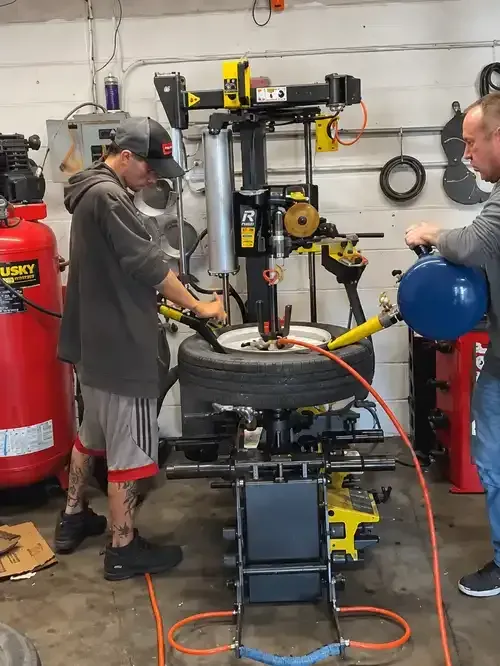
Reliable Tire Installation in Orange Park
Drivers choose Miller’s Automotive for tire installation in Orange Park. We mount and balance new tires and confirm that the TPMS works properly. We install tires on Honda, Toyota, Ford, Chevrolet, Nissan, Jeep, and other domestic and imported vehicles. Our service includes mounting, balancing, valve stem and TPMS sensor service, and tightening the lug nuts to specification. We also road-test the vehicle after installation.
Our ASE-certified technicians use a Hunter tire changer and calibrated wheel balancer to seat each tire correctly and prevent vibration at highway speeds. Before returning your vehicle, we verify the installation. We back every qualifying installation with our written warranty, and pricing varies by wheel size and sensor configuration.
Tire Installation Services at Miller's Automotive
Tire Mounting and Balancing
We begin the tire mounting and balancing process by placing a rim protector on the tire changer. This helps prevent gouges on aluminum and painted wheels. We then apply bead sealer to ensure the tire sits evenly on the wheel’s drop center.
The wheel balancer spins each tire and wheel assembly to identify high or heavy spots. We then place adhesive or clip-on wheel weights in the correct radial position to eliminate steering wheel vibration at highway speeds. Drivers who travel daily on I-295 or Blanding Boulevard often notice tire imbalance between 55 and 70 mph. We road-test every set before returning the vehicle to confirm a smooth ride.
TPMS Sensor Service and Reset
Whenever we remove a wheel, we inspect the TPMS sensor. We also replace the rubber grommet, valve core, and cap because the sensor’s seal wears out faster than the sensor itself. A TPMS sensor battery typically lasts 7 to 10 years. When the battery reaches the end of its life, we replace the sensor with an OE-matched unit. We then program it to the vehicle and reset the TPMS.
If the light stays on after installation, the cause is usually a sensor that lost its pairing during the swap, not a low tire. We confirm the cause with a scan tool instead of guessing.
Lug Torque and Final Inspection
We tighten lug nuts by hand with a torque wrench according to the manufacturer’s specifications. We never rely on an impact gun set to “close enough.” Uneven clamping pressure can warp the brake rotors over time. We provide a written re-torque reminder for 50 to 100 miles after installation, which is when initial seating settles on new wheel studs.
Alignment Check Recommendation
New tires wear at the same angle as the old ones. If the vehicle has a toe or camber issue, the new tires may show feathering within a few thousand miles. When intake reveals uneven wear on the tires being removed, we recommend a wheel alignment on our Hunter Hawkeye Alignment Machine to protect the new set.
Tire installation is one part of our broader suspension, steering, and wheel services at Miller's Automotive. For related services including alignment and suspension work, visit our suspension, steering, and wheel services page.
Common Tire Installation Symptoms in Orange Park
New tires installed elsewhere are safe to drive on in most cases. However, persistent vibration, an illuminated TPMS warning, or a wheel that won’t hold air may indicate an installation problem. Have the issue corrected before driving on the highway again. The failure points below are what we see most often from vehicles brought to us after an installation elsewhere.
Steering Wheel Vibration at Highway Speed
A steering wheel that shakes between 55 and 70 mph on I-295 or US-17 usually indicates a wheel balance issue. The wheel weights may have fallen off, or the imbalance may not have been corrected during the initial balancing. We rebalance each affected wheel on our machine and confirm the result on a road test.
TPMS Warning Light On After Installation
A TPMS light that came on immediately after a new-tire installation is not a low tire in most cases. It is a sensor that lost pairing with the vehicle during the swap or a sensor that was damaged when the tire was broken off the bead. We scan each sensor for signal, replace any that failed, and complete the TPMS reset.
Slow Air Loss From a New Tire
A tire that loses 2 to 5 psi per week after installation usually has a sealing problem. Common causes include an improperly seated bead, corrosion on the rim’s sealing surface, or a valve stem that was not replaced during installation.
Clay County’s humidity can accelerate corrosion and pitting along an aluminum wheel’s bead-sealing surface. This damage can allow air to escape even when the tire remains intact. We correct the problem by cleaning the sealing surface, applying tire bead sealer, and reseating the tire.
Clunking or Loose Feel After Installation
A clunk over expansion joints on Kingsley Avenue after installing new tires may indicate unevenly tightened lug nuts. It can also mean the hardware is not seated correctly against the hub face. We remove each wheel, inspect the hub-to-wheel contact surface for rust or debris, and re-torque to spec with a calibrated torque wrench.
What to Expect During Your Tire Installation
Intake and Concern Review
We compare the tire size, load rating, and speed rating with the information on your vehicle’s door jamb placard. We also discuss any concerns with the old tires, such as feathering, cupping, or previous vibration. This conversation shapes what we look for during removal.
Inspection and Diagnostics
Before mounting, we inspect the wheels for cracks, bent lips, and corrosion on the bead seat, and we check the TPMS sensor condition and battery status. If a TPMS sensor is nearing the end of its life, we’ll let you know before installing the tire. You can then decide whether to replace the sensor.
Clear Estimate
We give you a written estimate that covers mounting, balancing, valve stems, TPMS service, disposal fees, and recommended services such as an alignment. We won’t add any work or fees without your approval.
Installation and Balancing
We mount each tire on our tire changer with a rim protector in place. We then balance each wheel using the correct weights. Finally, we install the wheels and tighten the lug nuts to the manufacturer’s torque specifications.
Final Review and Follow-Up
We road-test your vehicle to check for vibration and confirm that the TPMS detects all four sensors. We also provide documentation with a reminder to have the lug nuts re-torqued. Before you leave, we confirm that the tires are properly seated, balanced, and monitored.
Ready to schedule your tire installation?
What Does Tire Installation Cost in Orange Park?
Tire installation cost depends on wheel size, TPMS sensor condition, and whether your vehicle needs an alignment after the swap. A standard four-tire installation includes mounting, balancing, new valve stems, and a TPMS reset. Replacing sensors or performing an alignment after installation costs more based on the parts required. We provide a written estimate before any work begins, and we install customer-supplied tires as well.
Our Promise to You
Every tire installation at Miller’s Automotive starts with a written estimate. We include the cost of wheel weights, valve stems, TPMS service, and any recommended alignment before you approve the work. Our ASE-certified technicians tighten every lug nut by hand with a torque wrench. They never rely on an impact gun or guesswork.
We back qualifying work with our written warranty. Our digital inspection includes photos of your wheels, tires, and sensors, so that you can review our findings. We also offer loaner vehicles through Enterprise Leasing, along with early drop-off and after-hours pickup options to help you stay on schedule.
What Our Customers Say
Serving Orange Park and Clay County Drivers
Miller's Automotive at 1156 Park Ave serves drivers across Orange Park, Fleming Island, Middleburg, Oakleaf, Lakeside, Jacksonville, and Green Cove Springs. Commuters who drive daily on I-295 and US-17 need their tires installed correctly the first time. Imbalances and TPMS faults often become noticeable at sustained highway speeds.
Tire Installation FAQs
How long does tire installation take?
A standard four-tire installation is typically a same-day job, including mounting, balancing, TPMS service, and the road test. We offer early drop-off if you need to leave the vehicle before we open.
How much does it cost to install four tires?
A standard four-tire installation covers mounting and balancing, new valve stems, TPMS reset, and disposal of the old tires. Sensor replacement or a post-install alignment costs more and is quoted separately in writing before we start.
Do I need an alignment after new tires?
We recommend an alignment if the old tires show uneven or feathered wear. A toe or camber issue can cause the same damage to the new tires. We check for these wear patterns during intake and recommend alignment only when the evidence supports it.
Should tires be balanced during installation?
Yes, every tire should be balanced during installation. We use adhesive or clip-on wheel weights in the correct radial position. We then road-test the vehicle to check for vibration between 55 and 70 mph.
Can I bring my own tires to a shop for installation?
Yes, Miller's Automotive installs customer-supplied tires. Before mounting each tire, we inspect its date code, check for damage, and compare the size with your vehicle’s placard. Mounting, balancing, and TPMS service cost the same whether you buy the tires from us or bring your own.
Schedule Your Tire Installation in Orange Park Today
Driving on improperly balanced tires can cause faster wear and vibration damage to wheel bearings and steering components. An incorrectly reset TPMS may also cause sensor faults that hide real low-pressure warnings. Call Miller’s Automotive to schedule professional tire installation.
