
Discover More On:
Car AC Suddenly Stopped Working? Find Trusted AC Repair Near Orange Park, FL
Browse by Repair
Ask five drivers "how often should I get a tune-up?" and you'll hear five different answers. Some say every year, some say every 30,000 miles, and some aren't sure modern cars need one at all. The real answer depends on your vehicle's age, its ignition system, and how you drive.
At Miller's Automotive in Orange Park, our Tune-Up service follows your manufacturer's schedule, not a one-size-fits-all number. Here's how the intervals work, what changes between older and newer cars, the symptoms that mean you shouldn't wait, and what to expect when you bring your car in.
What a Modern Tune-Up Includes
A modern tune-up replaces or inspects the parts that control ignition, air, and fuel, then uses a computer scan to confirm the engine is running the way it should. It no longer means adjusting points or a carburetor.
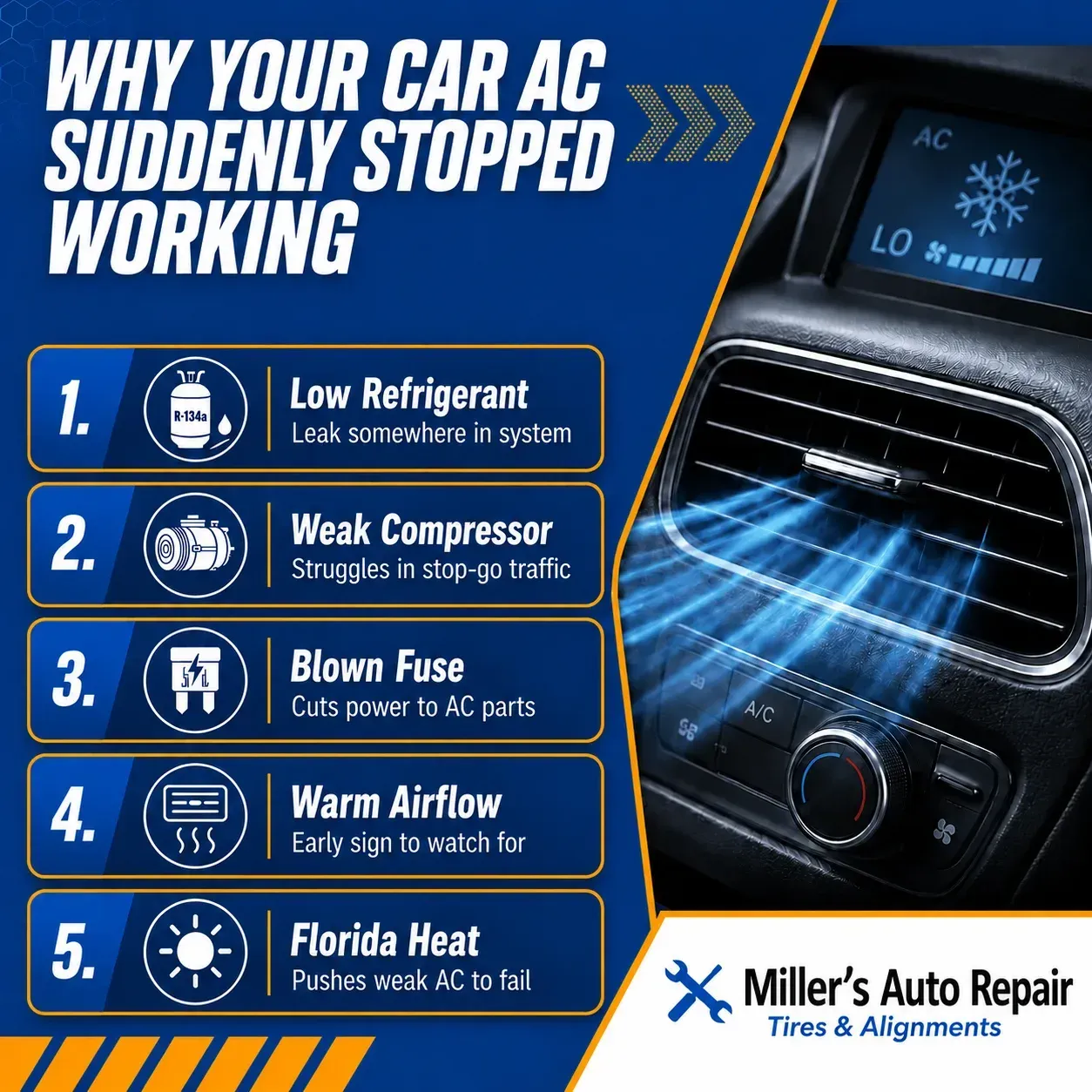
Computer Diagnostics
Today's engines are run by a computer, so we scan the engine control module with our Autel MaxiSYS MS906 Pro. That scan catches sensor faults, stored misfire codes, and fuel trim problems that a visual check would miss.
Mileage and Time Intervals: How Often Are You Supposed to Get a Tune-Up?
How often are you supposed to get a tune-up? For most newer vehicles, plan on a tune-up inspection about every 30,000 miles, with spark plugs replaced somewhere between 60,000 and 100,000 miles depending on the plug type. Older vehicles need service much more often.
Mileage Guidelines
Your owner's manual lists the exact spark plug and filter intervals for your engine. Iridium and platinum plugs last far longer than the copper plugs many older engines use, which is why intervals vary so widely.
Time Guidelines
Mileage isn't the only clock. If you drive less than about 10,000 miles a year, have the ignition, filters, and engine scan checked at least once a year anyway. Heat, humidity, and fuel that sits in the tank still take a toll on a car that mostly stays parked.
When Florida Driving Shortens the Schedule
Many manufacturers list a severe service schedule, and a lot of Orange Park driving fits it. Stop-and-go traffic on Blanding Boulevard, short trips around town, towing a boat to Doctors Lake, and months of AC running in high heat all count. If that sounds like your week, follow the shorter interval.
Differences for Older vs. Newer Vehicles
Older vehicles with non-electronic ignition need a tune-up every 10,000 to 12,000 miles or once a year. Newer vehicles with electronic ignition and fuel injection go much longer between tune-ups, but they still need scheduled plug, filter, and sensor care.
Older Vehicles
Carbureted engines and engines with distributor points drift out of adjustment as parts wear. Their tune-ups include setting ignition timing, adjusting the idle, and replacing points, condensers, and copper plugs on a tight schedule.
Newer Vehicles
Modern engines adjust timing and fuel mix automatically, so there's nothing to set by hand. The trade-off is that worn plugs, dirty injectors, and aging sensors can hide for a while before the computer flags them. A regular scan and inspection catches what you can't feel yet.
Warning Symptoms: When Should You Get a Tune-Up on Your Car?
When should you get a tune-up on your car? Right away if you notice falling gas mileage, hard starts, rough idling, hesitation, or a check engine light, even if you haven't hit the scheduled mileage yet.
Reduced Fuel Efficiency
If you're filling up more often on the same commute, worn plugs or clogged filters may be making the engine work harder than it should.
Hard Starting
Cranking longer than usual or struggling to start can point to ignition or fuel delivery problems. In Florida heat, rule out a weak battery too, since heat shortens battery life.
Rough Idle or Stalling
A shaky idle at a red light, or an engine that stumbles when the AC kicks on, often traces back to plugs, coils, or a dirty throttle body.
Misfires and Hesitation
A stutter when you merge onto I-295 is a classic misfire sign. If your check engine light is flashing, pull over when it's safe and have the car towed or driven gently to a shop, because a severe misfire can damage the catalytic converter. A steady light calls for Check Engine Light Diagnostics soon.
How Long the Tune-Up Appointment Takes
Most tune-ups take 1 to 3 hours. The exact time depends on your engine and what the inspection finds.
A four-cylinder with easy plug access sits at the short end. Many V6 engines hide the rear plugs under the intake manifold, which adds time. If the scan points to a deeper fuel or sensor issue, we'll call you before doing any added work.
If you can't wait at the shop, we offer early drop-off and after-hours pick-up. We also have valet pick-up and drop-off, and discounted Enterprise loaner vehicles for longer jobs.
Service Next Steps
Your next step is to check your owner's manual or last service record, then book a tune-up inspection if you're near the interval or noticing any symptoms. Skipping it lets small wear turn into bigger repairs, like a failed catalytic converter or a fouled injector.
When you come in, we'll inspect the vehicle, show you what we find through digital vehicle inspections with photos and videos, and sort recommendations by priority: what needs attention now, what can wait, and what to watch. If we find dirty injectors, our Fuel System Repair & Cleaning service can restore spray pattern and mileage. Many drivers pair a tune-up with an Oil Change and other Preventive Maintenance to cover everything in one visit.
Takeaways
The short answer to "how often should I get a tune-up?" starts with your vehicle's age and ignition type. Older cars need attention every 10,000 to 12,000 miles or yearly, while newer cars stretch much longer but still need regular plug, filter, and scan checks.
Symptoms like poor mileage, rough idling, or a check engine light mean it's time now, not at the next milestone. For Orange Park drivers dealing with heat, humidity, and stop-and-go traffic, staying on a severe service schedule is one of the easiest ways to protect the engine.
Frequently Asked Questions
Does a tune-up improve gas mileage?
It often does when worn plugs, a clogged air filter, or dirty injectors were dragging efficiency down. A car that was already running well won't see a big change, but it will stay efficient longer.
How much does a tune-up cost?
Cost depends on your engine, the number of cylinders, how hard the plugs are to reach, and which parts need replacing. We provide free estimates and a transparent upfront quote before any work begins.
Is a tune-up the same as an oil change?
No. An oil change replaces the engine oil and filter, while a tune-up focuses on ignition, air, and fuel parts. Both are part of routine maintenance, and they're easy to schedule together.
Can I skip a tune-up if my car runs fine?
You can stretch it a little, but worn plugs and filters lose efficiency gradually, so you often won't feel it until something fails. Following the interval costs less than repairing the damage a misfire can cause.
Will a tune-up fix my check engine light?
Sometimes, if the code is caused by a misfire from worn plugs or a failing coil. Many codes point to sensors or other systems, so we diagnose the cause first instead of guessing.
Get a Tune-Up That Fits Your Car at Miller's Automotive in Orange Park
Founded in 2008 by Ted Miller, Miller's Automotive helps drivers across Orange Park, Fleming Island, Oakleaf, and Middleburg keep their engines running strong. Our ASE Certified technicians follow your vehicle's factory schedule, explain what we find in plain language, and only recommend what your car actually needs. Our repairs are backed by warranties on parts and labor.
Call us at
(904) 364-9499 or stop by
1156 Park Ave, Orange Park, FL 32073, Monday through Friday, 7:30 AM to 5:30 PM.

Andrew Harris
Andrew Harris grew up in the bays of Automotive Excellence, the Seal Beach repair shop his father Joe opened back in 1981. When he officially stepped in as owner in 2005, Andrew carried on the family tradition with the same philosophy: deliver reliable auto care built on honesty and craftsmanship. What began as one small shop has grown into two Seal Beach locations, giving local drivers dealership-level service with a family-run feel.
Under Andrew’s leadership, Automotive Excellence has earned AAA Approval and built a team of ASE-Certified and Master technicians. From hybrid diagnostics to precision alignments, auto electrical repairs, and everything in between, his crew uses cutting-edge tools and training to tackle today’s most complex vehicles.
For Andrew, cars are only part of the story. He sees customers, vendors, and employees as neighbors first, and works to make every interaction built on trust and respect. Whether he’s sharing maintenance tips online or talking through a repair at the counter, his goal is to make car care clear, stress-free, and dependable for the Seal Beach community he proudly serves.
Discover More On:
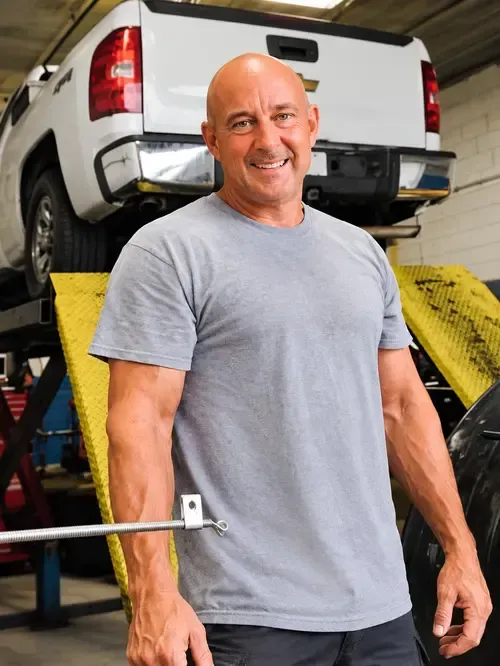
Edward Jay "Ted" Miller
Edward Jay "Ted" Miller is the founder and owner of Miller's Automotive in Orange Park, Florida, where he also serves as shop manager and lead technician. A lifelong Floridian raised in Orange Park, he has spent more than 35 years in the trade.
Ted started at Middleburg High School, completing three years of automotive mechanics training while actively participating in local car and motorcycle events. He came up as a tire and lube technician, then worked at Jim Martin Tires, Saturn of Orange Park, Firestone, and Goodyear, servicing domestic and import vehicles daily. He opened Miller's Automotive in 2008. Now an ASE-certified automotive technician, he still turns wrenches on brake repair and engine diagnostics for Toyota and other domestic and Asian vehicles.
Those years on the floor shaped how he runs the shop. Miller’s Automotive backs every repair with a one-year labor warranty. Ted has followed the same rule since 2008: repair each vehicle as if it belonged to family and recommend only the work it needs. Drivers looking for an auto repair shop in Orange Park, FL, get that same standard.
