
Discover More On:
Soft or Spongy Brake Pedal? Common Causes and Fixes
Browse by Repair
You press the brake pedal, and it sinks farther than it should. It might feel soft, mushy, or slow to respond. That feeling is your car telling you something is wrong with the braking system. If you're looking for soft brake pedal repair in Orange Park, FL, that drivers trust, you're not alone. This is one of the more common complaints our team hears at Miller's Automotive. It's also one you shouldn't ignore for long.
What Does a Soft or Spongy Brake Pedal Actually Mean?
Your brake system relies on hydraulic pressure to work correctly. Brake fluid moving through sealed lines creates the force needed for the system to operate. When this flow is disrupted, the pedal loses its firm resistance. A firm pedal should stop the car within a short, predictable distance. A spongy one often means you're pressing farther, and waiting longer, to get the same result. The difference between pressing the pedal and the vehicle responding can affect stopping distance and overall driving safety.
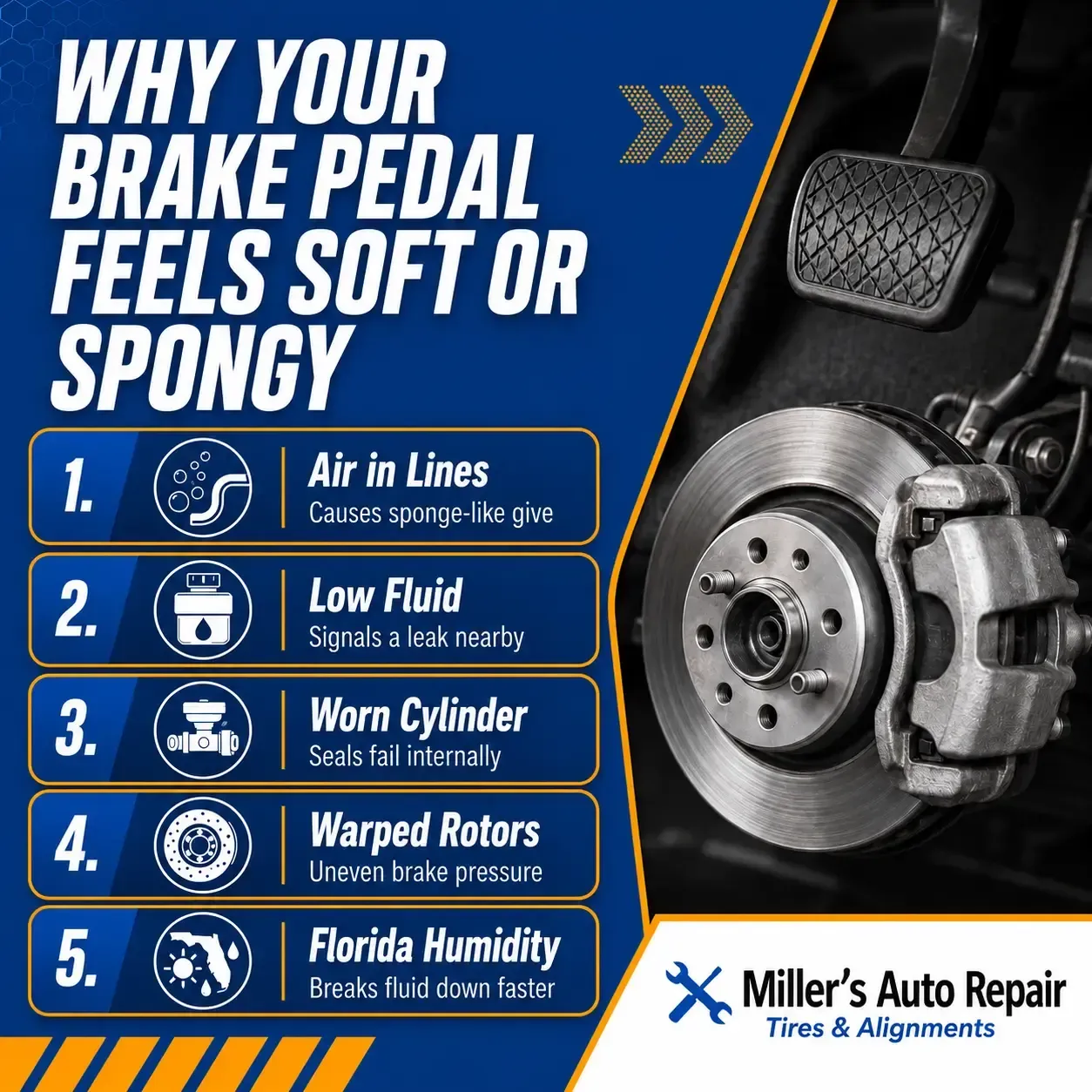
Common Causes of a Soft or Spongy Brake Pedal
Several different problems can create the same soft-pedal feeling. Some are simple fixes. Others need more involved repair work. A full brake repair and safety inspection usually starts here, since pads, fluid, and hydraulic components all get checked together.
Air Trapped in the Brake Lines
Brake fluid doesn't compress, but air does. If air gets into the lines, from a fluid change, a repair, or a slow leak, it creates that sponge-like give. This is one of the most common reasons a brake pedal feels spongy after recent brake work.
Low or Contaminated Brake Fluid
Brake fluid absorbs moisture over time. Contaminated fluid boils at a lower temperature and loses its ability to transfer pressure efficiently. Low fluid levels can also point to a leak somewhere in the system.
A Failing Master Cylinder
The master cylinder converts pedal pressure into hydraulic force. When internal seals wear out, fluid can bypass where it's supposed to go. The pedal sinks instead of holding firm resistance.
Worn Brake Pads or Warped Rotors
Thin brake pads change how the caliper engages the rotor. Warped rotors can create uneven pressure and a pulsing, spongy feel. Both issues tend to get worse the longer they go unaddressed.
Why Do Brake Pedal Problems Show Up More in Florida Weather?
Northeast Florida's humidity plays a bigger role in brake performance than most drivers expect. Brake fluid is hygroscopic, meaning it naturally attracts moisture from the air. Humid conditions around Orange Park and the St. Johns River area speed up that process.
Heavy afternoon rain adds another layer of strain. Water on the roads increases how hard the braking system has to work during sudden stops. A system that's already running on old or contaminated fluid struggles more under those conditions.
Is It Safe to Keep Driving With a Soft Brake Pedal?
A soft brake pedal is a safety concern, not just a comfort issue. Stopping distances increase, and pedal response becomes less predictable. This is especially risky in stop-and-go traffic on roads like Blanding Boulevard or near the 295 interchange.
If the pedal feels like it's sinking to the floor, treat that as urgent. A symptom like this often points to a serious fluid loss or master cylinder failure. Getting it checked quickly is the safer choice. It's also worth having a technician glance at suspension and steering components during that visit. These parts can sometimes mask or worsen how a brake problem feels when they become worn.
How Mechanics Diagnose and Fix a Spongy Brake Pedal
A proper diagnosis starts with a visual inspection of the entire brake system. Mechanics check fluid levels, look for leaks, and inspect pads and rotors. From there, a pressure test can help confirm whether air or a failing component is the cause.
Common fixes range from a simple brake fluid flush to bleeding air from the lines. More involved cases may require master cylinder replacement or new pads and rotors. At Miller's Automotive, we walk through our findings using photos from our digital vehicle inspections, so you can see exactly what's happening before any repair begins.
Catching a smaller problem early usually costs less than waiting for a bigger failure. Our comprehensive brake service checklist covers everything we look at during a visit like this.
Takeaways
A soft or spongy brake pedal almost always points to a specific, identifiable cause. Air in the lines, low or contaminated fluid, a failing master cylinder, or worn brake components are common reasons for the problem. Florida's humidity can speed up fluid breakdown, making the problem show up sooner than it would elsewhere.
This is not a symptom to wait out, since stopping distance and pedal predictability are both affected. A proper inspection identifies the real cause instead of guessing at a fix. With clear communication and an honest diagnosis, Miller's Automotive aims to get drivers back to a firm, reliable brake pedal quickly.
Frequently Asked Questions About Soft Brake Pedals
Can a soft brake pedal fix itself over time?
No, a soft pedal will not resolve on its own and usually gets worse. The underlying cause, whether air, fluid, or a worn part, needs to be addressed directly. Waiting typically leads to a bigger repair later.
How much brake fluid loss is considered dangerous?
Any noticeable drop in brake fluid level should be checked right away. It often points to a leak somewhere in the hydraulic system. Low fluid can also mean air has entered the lines.
Does a spongy brake pedal always mean the master cylinder is bad?
No, a spongy brake pedal does not always mean the master cylinder is bad. Air in the lines or contaminated fluid can cause similar symptoms. A proper diagnosis is the only way to know for sure since guessing can lead to unnecessary repairs.
How often should brake fluid be flushed?
Brake fluid should typically be flushed every two to three years, depending on the manufacturer's recommendation. Florida's humidity can shorten that interval since fluid absorbs moisture faster. Your mechanic can check fluid condition during a routine visit.
Is it safe to drive to the shop with a soft brake pedal?
It depends on how the brake pedal feels. Short, careful trips are usually possible if the pedal still has some resistance. If it sinks toward the floor or feels unpredictable, avoid driving and have the vehicle towed or inspected on site instead.
Get Trusted Brake Repair Near Orange Park, FL, at Miller's Automotive
A soft or spongy brake pedal is not something to put off. Our certified mechanics at Miller's Automotive diagnose the exact cause before recommending any repair. You'll get an honest explanation and a fair price, not a guessing game.
While your brakes are being inspected, it's also a good time to check other maintenance items, like an oil change service if one is coming due. Give us a call at (904) 364-9499 364-9499) or stop by our shop at 1156 Park Ave, Orange Park, FL 32073. We're open Monday through Friday, 7:30 AM to 5:30 PM, and glad to help drivers throughout Orange Park, Fleming Island, and Middleburg stop with confidence again.

Andrew Harris
Andrew Harris grew up in the bays of Automotive Excellence, the Seal Beach repair shop his father Joe opened back in 1981. When he officially stepped in as owner in 2005, Andrew carried on the family tradition with the same philosophy: deliver reliable auto care built on honesty and craftsmanship. What began as one small shop has grown into two Seal Beach locations, giving local drivers dealership-level service with a family-run feel.
Under Andrew’s leadership, Automotive Excellence has earned AAA Approval and built a team of ASE-Certified and Master technicians. From hybrid diagnostics to precision alignments, auto electrical repairs, and everything in between, his crew uses cutting-edge tools and training to tackle today’s most complex vehicles.
For Andrew, cars are only part of the story. He sees customers, vendors, and employees as neighbors first, and works to make every interaction built on trust and respect. Whether he’s sharing maintenance tips online or talking through a repair at the counter, his goal is to make car care clear, stress-free, and dependable for the Seal Beach community he proudly serves.
Discover More On:
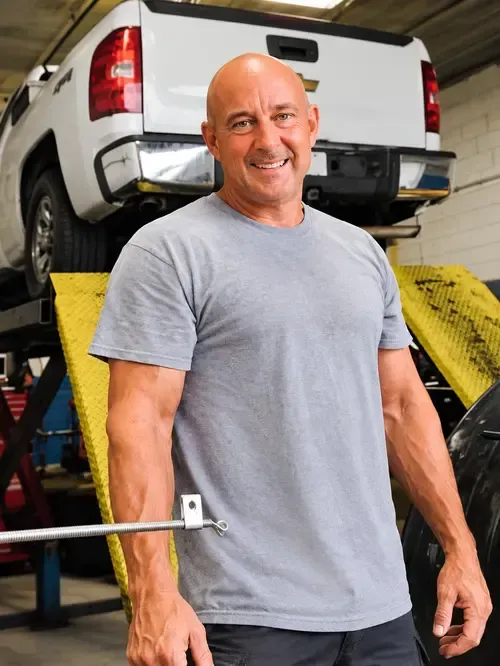
Edward Jay "Ted" Miller
Edward Jay "Ted" Miller is the founder and owner of Miller's Automotive in Orange Park, Florida, where he also serves as shop manager and lead technician. A lifelong Floridian raised in Orange Park, he has spent more than 35 years in the trade.
Ted started at Middleburg High School, completing three years of automotive mechanics training while actively participating in local car and motorcycle events. He came up as a tire and lube technician, then worked at Jim Martin Tires, Saturn of Orange Park, Firestone, and Goodyear, servicing domestic and import vehicles daily. He opened Miller's Automotive in 2008. Now an ASE-certified automotive technician, he still turns wrenches on brake repair and engine diagnostics for Toyota and other domestic and Asian vehicles.
Those years on the floor shaped how he runs the shop. Miller’s Automotive backs every repair with a one-year labor warranty. Ted has followed the same rule since 2008: repair each vehicle as if it belonged to family and recommend only the work it needs. Drivers looking for an auto repair shop in Orange Park, FL, get that same standard.
